2026 Best High Protein Dog Food Suppliers for Global Buyers

Global demand for high protein dog food is expanding, but protein percentage alone does not define quality. Buyers need clearer evidence.

The American Pet Products Association reported $147 billion in U.S. pet industry spending during 2023. Pet food and treats represented $58.1 billion. Its 2024 State of the Industry data shows strong consumer interest in nutrition, wellness, and premium formulations. Grand View Research also identifies dog food as a growing global category, supported by pet humanization and rising household spending.

Yet, “high protein” can describe very different products. One formula may use named chicken and fish meals. Another may rely heavily on plant proteins. Laboratory results, digestibility data, amino acid balance, and feeding-trial information matter more than front-label claims. They also matter for global purchasing decisions.

Dr. Lisa Freeman, a veterinary nutritionist at Tufts University, has cautioned, “More protein is not necessarily better.” That reminder deserves attention. A working adult dog, an elderly dog, and a dog with kidney concerns may require different nutritional strategies. Buyers should request current certificates of analysis, ingredient specifications, manufacturing details, and compliance evidence for each destination market.

This guide reviews 2026 high protein dog food suppliers for international buyers. It considers protein sources, production capacity, private-label support, documentation, quality controls, and export experience. Some supplier information may change quickly. That is an uncomfortable limitation.

Still, careful verification reduces avoidable risk. A glossy package cannot replace traceable testing. Reliable sourcing begins with questions, not assumptions.
2026 Best High Protein Dog Food Suppliers for Global Buyers

What Defines a High-Protein Dog Food Supplier in 2026

In 2026, a high-protein dog food supplier must offer more than an impressive percentage on the label. Protein quality, digestibility, amino acid balance, and feeding suitability matter equally. Buyers should examine whether the formula uses clearly identified animal or plant sources. Vague ingredients can weaken confidence. A reliable supplier provides nutritional specifications for each product and explains how the formula supports different life stages, sizes, and activity levels.

Practical experience often reveals gaps that brochures hide. Ask for batch-level laboratory reports covering protein, moisture, fat, microbiological safety, and unwanted contaminants. Check whether the supplier controls ingredient traceability from approved farms or processors to finished cartons. Veterinary nutritionists, food scientists, and quality managers should participate in formulation and production reviews. Clear export documentation also matters, especially when buyers serve several regulated markets. Delayed answers are a warning sign.

Consistency is the real test. A capable supplier should maintain stable texture, smell, packaging, and nutrient values across repeated orders. Small trial shipments can expose problems before a large contract creates pressure. No supplier gets every formula right. Some recipes may need better palatability testing or stronger performance evidence. That is acceptable when the supplier records feedback, investigates complaints, and improves transparently. Global buyers should value honest limitations, measurable controls, and dependable communication over polished promises.

Key Nutrition Standards for Evaluating High-Protein Dog Food

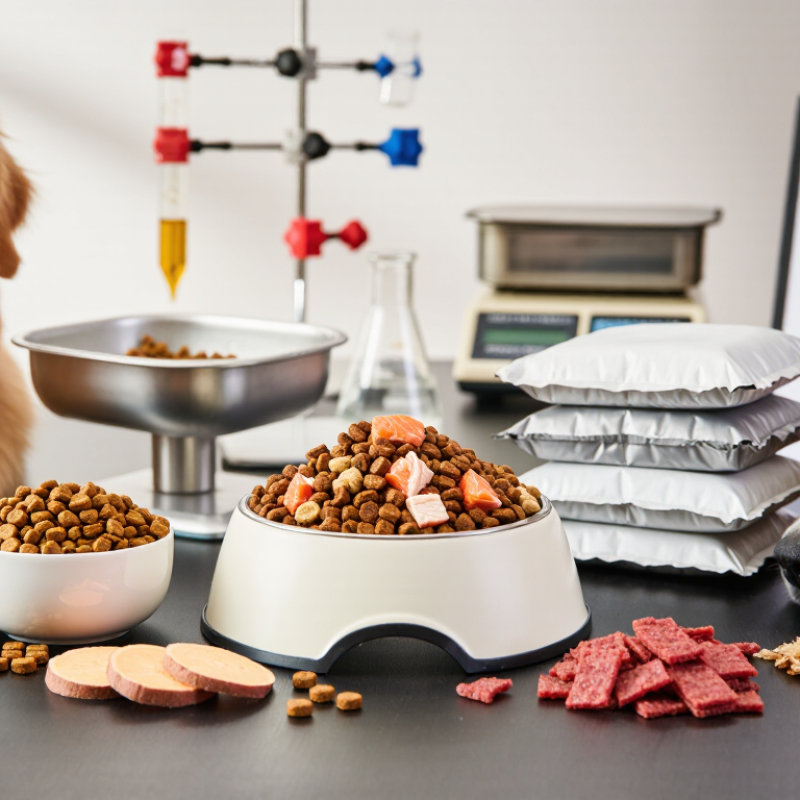
For global buyers, high-protein dog food should meet clear nutrition standards, not simply display a large protein number. Check the guaranteed analysis and compare protein on a dry-matter basis, especially between dry food and wet food. A reliable formula should provide complete and balanced nutrition for the intended life stage. Protein sources should be identifiable, digestible, and supported by an appropriate amino acid profile. Muscle condition matters more than marketing language.

Independent laboratory testing adds practical confidence. Ask suppliers for recent results covering protein accuracy, moisture, harmful contaminants, and microbiological safety. Review batch numbers, ingredient traceability, production dates, and storage instructions. Suppliers with documented quality systems and transparent manufacturing records are easier to evaluate. However, paperwork is not proof of perfect performance. Feeding responses can vary between dogs, and a formula may need further observation.

Tips: Request a sample batch before placing a large order. Compare laboratory data with the label. Check whether the supplier explains testing methods clearly. Watch the dog’s stool quality, coat condition, appetite, and body weight after a controlled change. This is where mistakes happen. Buyers sometimes reward the highest protein percentage, while excessive protein may not suit every dog’s age, health status, or activity level. A careful review should include veterinary input when nutritional needs are uncertain.

Types of Global Suppliers and Their Manufacturing Capabilities

2026 Best High Protein Dog Food Suppliers for Global Buyers

Global suppliers usually fall into four groups: direct manufacturers, contract producers, ingredient specialists, and export distributors. Direct manufacturers often control formulation, extrusion, drying, packaging, and batch scheduling. They may support large orders with consistent production records. Contract producers can offer private-label development, but minimum order quantities may be higher than expected. Ask for pilot batches.

Ingredient specialists supply animal proteins, fish meals, eggs, or novel protein sources to finished-food manufacturers. Their strength is raw material control, including origin records, storage temperature, and contaminant testing. Export distributors provide broader market access, yet their product knowledge can vary. Not every supplier is equally transparent.

Manufacturing capability should match the buyer’s target market and sales volume. Extruded kibble suits scalable production and long-distance shipping. Freeze-dried and air-dried products need careful moisture control, sealed packaging, and slower throughput. Wet food requires retort processing, reliable cans or pouches, and strict thermal documentation. Ask for batch evidence. Details matter.

Experienced buyers should review protein percentages, ingredient specifications, feeding-stage suitability, and laboratory results. They should also check traceability from raw material intake to finished cartons. Certifications can support confidence, but certificates must be current and independently verifiable. Export paperwork, labeling rules, language requirements, and shelf-life testing differ by destination. A supplier may perform well technically but still lack dependable communication. That weakness can delay approvals. My own assessment would not rely on a factory tour alone; production samples, corrective-action records, and repeated batch results reveal more.

2026 Best High Protein Dog Food Suppliers for Global Buyers

Types of Global Suppliers and Their Manufacturing Capabilities

Supplier Type Common Production Regions Typical High-Protein Formats Typical Crude Protein Range* Manufacturing Capabilities Ingredient & Process Strengths Quality & Export Considerations Best Fit for Global Buyers
Large-scale dry-food manufacturers North America, Western Europe, Central Europe, Australia and New Zealand Extruded kibble, high-meat kibble, puppy and active-dog formulas Approximately 25–40% as-fed, depending on recipe and moisture High-throughput extrusion, drying, coating, cooling, automated filling and batch traceability Consistent particle size, controlled gelatinization of starch, animal-protein meals, poultry, fish or meat ingredients Usually able to support HACCP-based systems, feed-safety plans, laboratory testing and country-specific labeling Large-volume retail, distributors, private-label programs and multi-country launches
Specialized freeze-dried food suppliers North America, Europe, Australia and selected Asian production hubs Freeze-dried complete meals, toppers, treats and rehydratable raw-style products Often 35–60% as-fed; label comparison should also use dry-matter values Freezing, vacuum sublimation, controlled rehydration testing, portioning and high-barrier pouch packing High inclusion of meat, organs or fish; low-temperature dehydration helps retain product structure and aroma Requires strong control of pathogen risks, water activity, shelf-life validation and moisture-barrier packaging Premium channels, specialty pet retailers, e-commerce and lightweight export products
Retort wet-food manufacturers North America, Europe, Southeast Asia, Australia and Latin America Cans, trays, retort pouches, loaf, chunks in gravy and meat-based pâté Approximately 8–14% as-fed; dry-matter protein is typically much higher Grinding, emulsification, cooking, filling, sealing, retort sterilization and incubation checks High moisture and animal-tissue inclusion; suitable for complete diets or complementary meal toppers Commercial sterility, seam or seal integrity, thermal-process records and packaging migration compliance are essential Wet-food brands, mixed-feeding portfolios, veterinary channels and markets preferring soft textures
Air-dried and gently dried suppliers North America, Europe, Australia, New Zealand and selected Asian facilities Air-dried complete food, jerky-style meals, training treats and meat strips Commonly 30–45% as-fed, with substantial variation by moisture and recipe Low-temperature drying, controlled airflow, batch mixing, metal detection and pouch or carton packing Dense meat-based recipes, reduced water content and limited dependence on high-temperature extrusion Water activity, pathogen reduction, oxidation control and shelf-life testing must be documented Premium natural positioning, travel-friendly products and buyers seeking an alternative to kibble
Raw and frozen pet-food processors North America, Europe, Australia and New Zealand Frozen patties, nuggets, mince, raw portions and complete frozen meals Often 12–20% as-fed; formulation should be assessed on a dry-matter basis Cold-chain processing, grinding, blending, portioning, blast freezing and frozen distribution Fresh or frozen meat, organs, bone components and controlled supplementation Strict pathogen controls, supplier approval, cold-chain monitoring, thawing instructions and destination-country rules are critical Specialty retailers, direct-to-consumer subscriptions and markets with reliable refrigerated logistics
Treat and functional-snack manufacturers North America, Europe, China, Southeast Asia and Latin America Jerky, meat strips, dental chews, baked treats, soft chews and freeze-dried bites Highly variable; many meat treats contain 30–70% protein as-fed Baking, molding, forming, smoking where permitted, drying, coating and small-format packaging Concentrated animal proteins, collagen, fish ingredients and functional inclusions such as vitamins or minerals Treats may not be complete and balanced; claims, additives, preservatives and animal-origin import rules require review Promotional products, premium treats, subscription boxes and private-label line extensions
Private-label and contract manufacturers Europe, North America, Turkey, China, Thailand, Vietnam, Australia and other established feed-manufacturing hubs Dry, wet, freeze-dried, air-dried, treats and mixed-format product ranges Set by the agreed formulation; protein level should be confirmed through the final guaranteed analysis Formula development, pilot batches, scalable production, custom packaging, artwork support and export documentation Flexible protein sources, recipe customization, pack-size options and coordinated ingredient procurement Buyers should verify audit reports, product specifications, ownership of formulas, testing plans and minimum order quantities Importers, distributors, retailers and emerging brands requiring custom products without owning a factory
Ingredient and premix suppliers Global animal-feed and food-ingredient production regions Meat meals, fish meals, hydrolyzed proteins, collagen, egg products, vitamins and mineral premixes Individual ingredients may range from below 20% to above 80% protein, depending on material and moisture Rendering, drying, hydrolysis, milling, blending, standardization and bulk or bagged shipment Supports protein fortification, amino-acid balancing, palatability improvement and formulation consistency Species declaration, origin, contaminant limits, microbiological results, oxidation data and feed-grade compliance are important Food manufacturers developing high-protein recipes or seeking reliable regional ingredient sourcing

*Protein ranges are indicative industry ranges expressed on an as-fed basis unless otherwise stated. Moisture materially affects comparisons; global buyers should also review dry-matter calculations, complete-and-balanced status, applicable nutritional standards, microbiological specifications, shelf-life data and import requirements for the destination market.

How to Compare Quality, Safety, Pricing, and Supply Reliability

2026 Best High Protein Dog Food Suppliers for Global Buyers

Comparing high protein dog food suppliers requires more than reading protein percentages. Buyers should review ingredient origins, processing methods, and batch consistency. Animal protein should be clearly identified, not hidden behind vague terms. Ask for recent laboratory reports covering protein, moisture, microbial safety, and unwanted contaminants. Certificates can support trust, but they do not replace independent verification. I have found that traceability matters most when a shipment arrives with unusual color or odor.

Safety records deserve careful attention. Check factory hygiene controls, recall procedures, shelf-life testing, and packaging performance under humid conditions. Suppliers should provide samples from different production batches. One sample can look excellent. Three samples reveal more. Verify whether formulas meet destination-market feed regulations before signing contracts. Requirements differ across regions, and assumptions create expensive delays.

Tips: Compare total landed cost, not only the factory price. Include testing, freight, insurance, duties, storage, and possible relabeling. Request a clear minimum order quantity and realistic lead time. Ask how suppliers handle ingredient shortages or port disruptions. A reliable partner shares production schedules early and offers documented alternatives. However, backup formulas may change nutrition or palatability. That point deserves honest review. Payment terms, communication speed, and complaint handling also show operational maturity. A cheaper supplier may become costly when late deliveries interrupt retail planning.

International Buying Factors: Certifications, Logistics, and Market Fit

For global buyers, selecting a high protein dog food supplier requires more than comparing protein percentages. Request current manufacturing certificates, product specifications, ingredient origins, and batch-level certificates of analysis. Documents should match the actual factory and shipment. Check traceability from raw material intake to sealed cartons. A remote audit helps, but an on-site inspection reveals more.

Logistics can quietly damage product quality. Confirm shelf life at delivery, container loading methods, pallet standards, and moisture protection. For sea freight, review temperature exposure and port delays before signing purchase terms. Use clear Incoterms and define responsibility for damaged packaging. A trial shipment is safer than approving a large order immediately. Small tests matter.

Market fit also varies by country. Protein sources must suit local feeding habits, price levels, and import rules. Labels may require specific language, nutritional declarations, feeding instructions, or allergen statements. Some markets prefer poultry or fish, while others accept novel proteins more readily. Ask for palatability data and feeding-trial evidence, not only laboratory figures. High protein is not automatically better for every dog.

I have seen impressive samples fail because cartons softened during humid storage. No checklist is perfect. Buyers should review supplier performance after each shipment, including delivery accuracy, complaint response, and consistency between batches. Flexible minimum order quantities can help test regional demand without creating avoidable inventory pressure. Supplier communication matters. A fast answer is useful, but a documented answer is more reliable.