2026 Top Puppy Dog Food Brands Buyers Should Choose?
Choosing the right puppy dog food in 2026 is not simply a matter of selecting the most expensive bag. Growing puppies need balanced energy, high-quality protein, suitable calcium, and carefully controlled minerals. Their food should also match breed size, age, activity, and health history.
Dr. Lisa M. Freeman, a veterinary nutritionist at Tufts University, has emphasized, “There is no single best diet for every dog.” That warning matters. A tiny toy-breed puppy may need smaller kibble and higher calorie density, while a large-breed puppy requires controlled growth to reduce skeletal stress. One formula cannot serve every growing body perfectly.
Look beyond bright packaging and dramatic promises. Check whether the product is labeled complete and balanced for growth, ideally under recognized nutritional standards such as AAFCO or FEDIAF. Review the feeding chart, but treat it as a starting point. Your puppy’s ribs should be easy to feel, not hidden beneath thick fat.
Real experience also exposes weak assumptions. Grain-free does not automatically mean healthier. “Natural” does not guarantee nutritional adequacy. Even premium brands can disappoint if your puppy develops loose stools, itching, or poor weight gain.
This guide examines leading puppy dog food brands through ingredient quality, nutritional evidence, manufacturing transparency, recall history, cost, and veterinarian guidance. It also recognizes an uncomfortable truth: labels can look convincing while remaining difficult for ordinary buyers to compare. The best choice is rarely the loudest one. It is the food that supports steady growth, healthy digestion, and a puppy’s changing needs.
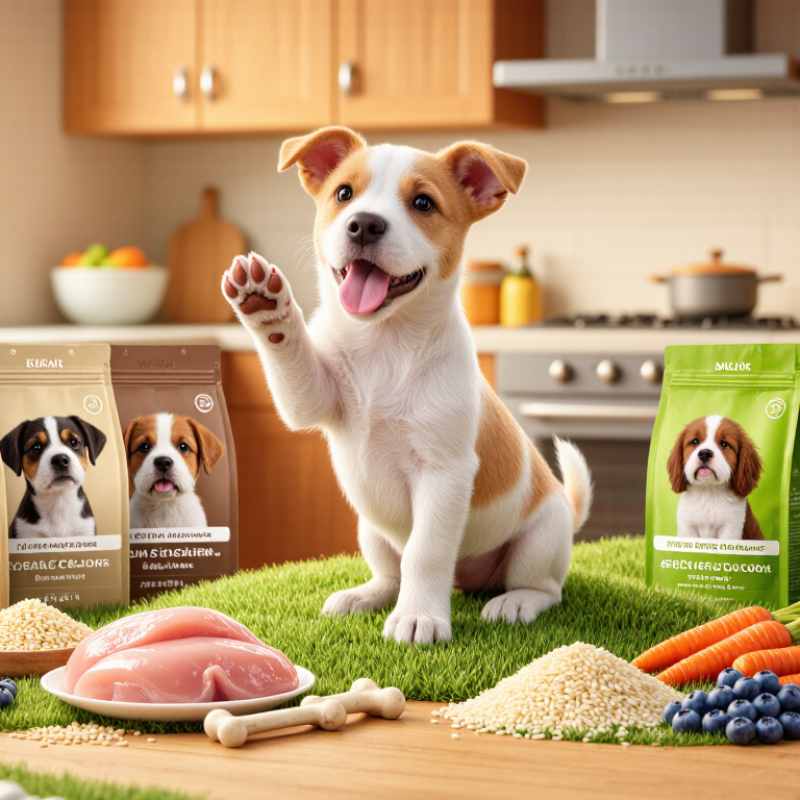
Define Puppy Nutrition Needs Using AAFCO Growth Standards: 22.5% Protein, 8.5% Fat
Choosing Puppy Food in 2026: Start With AAFCO Growth Standards
Puppies need concentrated nutrition for bones, muscles, organs, and rapid growth. The AAFCO Dog Food Nutrient Profiles list
22.5% crude protein and
8.5% crude fat as minimums for growth, measured on a dry-matter basis. These figures are not label percentages on every package. Moisture changes the calculation. A food containing 25% protein may provide less after moisture is removed.
Check the guaranteed analysis, then convert nutrients to dry matter. The formula is simple:
listed nutrient percentage divided by dry-matter percentage, multiplied by 100.
The AAFCO 2024 Official Publication also emphasizes balanced calcium and phosphorus for growing dogs. Large-breed puppies require extra care because excessive energy or minerals can stress developing joints. FEDIAF’s 2024 Nutritional Guidelines similarly stress life-stage feeding and controlled energy density.
Numbers help, but they do not replace observation. A healthy puppy should gain weight steadily, show bright eyes, and maintain firm stools. Ribs should be easy to feel, not visibly sharp. I have seen owners choose the highest protein label and overlook calorie density. That choice can backfire. Feeding directions are only starting points. Adjust portions with veterinary guidance, especially during rapid growth, because published standards are minimums, not a complete feeding plan.
Compare 2026 Brands by AAFCO Feeding Trials, Ingredient Quality, and Safety Data
When comparing 2026 puppy foods, check whether the label says the food was tested in feeding trials for growth or formulated to meet established nutrient profiles. These are different routes, and neither means a food suits every puppy. Confirm it is intended for growth; puppies expected to weigh 70 pounds or more as adults need appropriate guidance for large-size growth. Ask your veterinarian if the label is unclear.
Ingredient quality takes more than spotting a familiar meat near the top of the list. Look for a complete nutrient profile, clear feeding directions, and contact details for the company’s nutrition team. Safety data matters, too: check for published quality controls, batch testing, and recall information. A clean-looking ingredient list cannot prove safety. Small details matter.
Tips: Compare calories per cup and feeding amounts, then track your puppy’s weight and stool changes. Keep the package and lot code. Discuss persistent digestive problems or slow growth with a veterinarian rather than switching foods repeatedly. No label is perfect; I would still want clearer, comparable testing details across brands.
Assess Large-Breed Puppy Formulas Against AAFCO Calcium and Phosphorus Limits
For a large-breed puppy, calcium and phosphorus deserve a close look. AAFCO’s growth profile for dogs expected to weigh at least 70 pounds as adults sets calcium at 1.2% minimum and 1.8% maximum on a dry-matter basis. Phosphorus ranges from 1.0% to 1.6%. The calcium-to-phosphorus ratio should fall between 1:1 and 2:1.
Check the food’s nutritional adequacy statement for growth, including growth of large-size dogs. That wording matters. Guaranteed-analysis figures may be listed as fed, not on a dry-matter basis, so they cannot always be compared directly with AAFCO limits. Ask the manufacturer for a typical nutrient analysis if the label is unclear, and compare values using the same basis. A veterinarian can help interpret the numbers, especially if your puppy has a health concern.
More calcium is not automatically better. Rapid growth and excess calories can add strain to developing joints, so measure meals rather than filling the bowl by eye. A puppy’s appetite can change quickly. I still find labels confusing. Even a well-presented analysis cannot tell you everything about how an individual puppy will grow, so track weight and body condition with your veterinarian.
2026 Top Puppy Dog Food Brands Buyers Should Choose? - Assess Large-Breed Puppy Formulas Against AAFCO Calcium and Phosphorus Limits
| Evaluation Item |
AAFCO Growth Profile Benchmark |
What Buyers Should Check |
Screening Result |
| Intended life stage |
Food should be labeled for growth, including growth of large-size dogs expected to weigh 70 lb (32 kg) or more as adults. |
Read the nutritional adequacy statement on the package. A general “puppy” or “all life stages” claim alone does not confirm that the food is suitable for large-size growth. |
Pass when the statement explicitly includes large-size dogs; otherwise, request clarification from the manufacturer. |
| Calcium, dry-matter basis |
Minimum: 1.2%
Maximum: 1.8% |
Compare the food’s calcium concentration on a dry-matter basis with both limits. Do not compare an as-fed percentage directly with these figures. |
Pass only when the reported value is within 1.2%–1.8% dry matter. |
| Phosphorus, dry-matter basis |
Minimum: 1.0%
Maximum: 1.6% |
Ask for a typical nutrient analysis if phosphorus is not shown in the guaranteed analysis. Confirm that the figure is on a dry-matter basis. |
Pass only when the reported value is within 1.0%–1.6% dry matter. |
| Calcium-to-phosphorus ratio |
Acceptable ratio: 1:1 to 2:1 by weight |
Divide the calcium percentage by the phosphorus percentage using values reported on the same basis. |
Pass when the calculated ratio is between 1:1 and 2:1. |
| Converting as-fed minerals to dry matter |
Dry-matter percentage = as-fed percentage × 100 ÷ (100 − moisture percentage) |
Use the food’s moisture percentage and mineral values from the same product analysis. For example, wet and dry foods cannot be compared fairly using as-fed values alone. |
Recalculate before comparing with the AAFCO dry-matter benchmarks. |
| Missing or unclear nutrient figures |
Calcium, phosphorus, and their ratio must be assessable against the applicable growth profile. |
Request typical or average calcium and phosphorus values, the reporting basis, and confirmation that the formula is intended for large-size puppy growth. |
Unverified—not enough information to confirm compliance. |
Important: These are AAFCO growth-profile screening benchmarks, not a ranking of products or a guarantee of suitability for an individual puppy. Ask the manufacturer for complete nutrient data when the package does not provide it, and consult a veterinarian about an individual puppy’s diet.
Verify Life-Stage Labels, Calorie Density, DHA Sources, and Manufacturing Controls
2026 Top Puppy Dog Food Brands Buyers Should Choose?
Verify Life-Stage Labels, Calorie Density, DHA Sources, and Manufacturing Controls
A puppy’s food label should clearly identify a growth or puppy life-stage diet. Check whether it is suitable for your puppy’s expected adult size; growth needs can differ, especially for large-breed puppies. Look for a nutritional adequacy statement, not just front-of-bag promises. Labels are useful, but they are not perfect. I would still ask a veterinarian when a puppy has a health concern or unusual growth pattern.
Calorie density deserves close attention. Compare calories per cup or kilogram, then measure meals with a real measuring cup or kitchen scale. A small-looking serving may be energy-dense. Track your puppy’s weight and body condition, and adjust portions with veterinary guidance rather than relying only on feeding charts. Puppies grow quickly. Their needs change.
DHA supports normal brain and eye development. Check whether the label identifies a source, such as fish oil or algae, rather than relying on a broad omega-3 claim. Manufacturing matters, too. Ask whether the company tests finished batches, tracks ingredient suppliers, and has documented quality controls. Clear answers are reassuring; vague assurances are not. No label can tell you everything, and I sometimes find that frustrating.
Rank the Best Puppy Foods by Evidence, Transparency, Price, and Veterinary Guidance
A useful puppy-food ranking should begin with evidence, not packaging claims. Check whether the label says the food is complete and balanced for growth, and whether it suits a puppy’s expected adult size. For large-size puppies, growth-specific guidance matters. Look for clear feeding directions, calorie information, and an accessible manufacturer contact. Check the label. A polished bag alone proves little.
Transparency deserves real weight. Manufacturers should explain who formulates the food, how quality is checked, and what research supports its use. Feeding studies can add useful evidence, but no single study answers every question. Price matters too: compare the estimated daily cost for your puppy’s weight, not just the bag price. A cheaper food may require larger portions, so the shelf tag can mislead. Rankings should show these trade-offs instead of pretending one score fits every household.
Veterinary guidance helps match food to a puppy’s health, growth, and routine. Ask your veterinarian before changing diets if your puppy has digestive trouble, unusual growth, or a diagnosed condition. Then transition gradually and watch stool, appetite, and body condition. I would not treat online ratings as a substitute for that conversation; even careful rankings have gaps. A food that works for one puppy may not suit another.
2026 Top Puppy Dog Food Brands: How to Evaluate Your Options
Suggested weighting for comparing puppy foods by evidence, transparency, price, and veterinary guidance.
Evidence receives the greatest suggested weight, followed by ingredient and nutrition transparency and veterinary guidance. Price matters, but should be considered alongside whether the food is labeled as complete and balanced for growth. These percentages are an editorial comparison framework, not measured brand scores or veterinary advice. Ask your veterinarian for guidance tailored to your puppy.