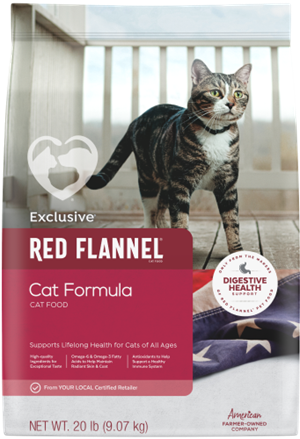
Sourcing pro dog food globally in 2026 requires more than comparing prices or attractive packaging. Buyers must examine ingredient quality, nutritional adequacy, manufacturing controls, and supplier transparency. Veterinary nutritionist Dr. Lisa M. Freeman states, “There is no one best diet for every pet.” Her point matters across international markets, where dogs have different ages, health needs, activity levels, and feeding habits.
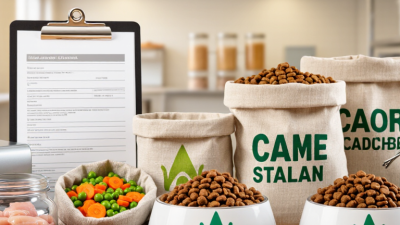
A reliable sourcing process begins with verified manufacturers and documented quality systems. Request complete formulations, laboratory test results, allergen controls, and batch traceability records. Check whether the product meets recognized nutritional standards, such as those established by AAFCO or FEDIAF. Review the factory, not only the sales presentation. Stainless steel mixing lines, sealed storage bins, and clear lot codes reveal practical discipline. They do not prove everything.
Global logistics add another layer of risk. Temperature swings, port delays, humidity, and damaged cartons can affect product quality. Importers should confirm shelf-life policies, packaging strength, insurance, and local labeling requirements before placing large orders. A supplier that answers slowly may still produce good food, but uncertainty deserves attention. I have seen buyers focus heavily on unit cost and overlook testing frequency or recall procedures. That mistake can become expensive. Sometimes, the cheapest shipment is the least economical choice. In 2026, responsible pro dog food sourcing should balance nutrition, evidence, compliance, and dependable communication. No checklist is perfect. Critical review remains necessary.

Defining global pro dog food sourcing requirements starts with the dog, not the supplier. Specify life stage, body size, activity level, dietary sensitivities, and feeding purpose. Record protein sources, fat levels, fiber targets, moisture, calories, and permitted additives. Use measurable ranges instead of vague terms like “premium” or “high quality.” Keep the draft practical.
My first sourcing brief was too general. It caused avoidable revisions. A stronger brief states monthly volume, minimum order quantity, packaging sizes, shelf life, storage conditions, and preferred delivery windows. It also identifies destination markets before requesting quotations. Different countries may require specific labels, language, ingredient declarations, certificates, and import documents. Confirm these details with qualified regulatory professionals and competent authorities.
Quality requirements should be testable. Request batch-level laboratory results, traceability records, allergen controls, manufacturing procedures, and recall plans. Define acceptable limits for moisture, pathogens, contaminants, and packaging defects. Audit experience matters, but paperwork alone is not proof. Ask how deviations are handled.
Supply continuity needs its own section. List approved ingredient alternatives, backup production capacity, transport routes, and emergency communication contacts. Test samples under realistic storage conditions. My weak point was assuming one successful sample guaranteed consistency. It does not. Review performance across several batches, seasons, and shipment conditions before scaling orders globally.

Researching international professional dog food suppliers in 2026 requires more than comparing price lists. A credible review begins with the factory, not the sales pitch. Check ownership details, production addresses, operating history, and quality staff. Request current ingredient specifications, nutrient analysis, allergen controls, and batch traceability records. Ask how each raw material moves from the receiving dock to the sealed carton. Small details matter. A clean, dated sample label can reveal more than polished photographs.
Before ordering, compare suppliers using the same checklist. Examine minimum order quantities, lead times, packaging options, storage conditions, and temperature controls. Request recent certificates of analysis for finished batches, not generic templates. Independent laboratory testing can verify protein, fat, moisture, and microbiological limits. Review recall procedures and complaint response times. Suppliers should explain destination-market import documents and labeling requirements without promising shortcuts. I would inspect a video audit carefully, though it cannot replace an onsite visit. That limitation is easy to forget.
Order samples from different production lots when possible. Record odor, kibble size, seal quality, and feeding response during controlled trials. Keep records. Include dates and lot numbers. Ask direct questions about ingredient substitutions, supply interruptions, and reformulation notices. A supplier that answers precisely is easier to manage. Still, confidence should remain conditional. Claims can change after the first contract. Recheck documents before shipment, and use written specifications with measurable acceptance criteria. One overlooked detail can become a costly warehouse problem.
Export concentration can help procurement teams identify established sourcing regions before evaluating suppliers. Germany, the United States, France, Poland, and Thailand were among the major reported exporters of retail-packed dog and cat food in 2023. When researching suppliers for 2026, compare export capacity with product compliance, ingredient traceability, production certifications, minimum order quantities, lead times, and import requirements in the destination market.
Source: UN Comtrade international trade statistics, HS code 230910 “Dog or cat food, put up for retail sale,” 2023 reported export values. Values are rounded and exclude company-level or brand-level data.
Global sourcing of professional dog food begins with evidence, not attractive packaging. Ask each supplier for a current ingredient specification, certificate of analysis, and manufacturing-flow description. Compare declared nutrients with laboratory results from independent, accredited testing facilities. Test representative batches for moisture, protein, fat, pathogens, heavy metals, and prohibited contaminants. Keep samples sealed and dated. That matters. A slight mismatch may signal weak controls, not merely a paperwork error.
Requirements change by destination. Verify ingredient permissions, labeling language, guaranteed analysis, feeding directions, traceability, and import documents for every market. Check whether the facility follows recognized feed-safety systems and whether audits are recent. Do not rely on a certificate copied from an old shipment. Request lot codes, recall procedures, allergen controls, and storage records. Keep records. In practical sourcing, delays often arise from one missing translation or unclear net-weight statement.
Before signing, run a controlled pilot shipment. Inspect sealed bags, pallet condition, temperature exposure, and delivery timing at arrival. Use written acceptance standards with measurable limits. If results fail, quarantine the lot and investigate before release. No checklist is perfect. Recheck suppliers annually, especially after formula, factory, or regulatory changes. The uncomfortable truth is that low prices can hide testing gaps, weak traceability, or unstable production. A reliable buyer leaves room for doubt and documents every decision.
| Market or Region | Key Regulatory Framework | Mandatory or Expected Compliance Focus | Documents to Request | Critical Verification Point |
|---|---|---|---|---|
| United States | Federal Food, Drug, and Cosmetic Act; Food Safety Modernization Act; applicable state feed laws | Facility registration where required, preventive controls, hazard analysis, sanitary controls, ingredient legality, and compliant labeling | Food safety plan, preventive-control records, ingredient specifications, certificate of analysis, label artwork, recall procedure | Confirm that the product category, ingredients, claims, and guaranteed analysis are legally appropriate for the intended state and federal market |
| European Union | Regulations (EC) No. 183/2005, 767/2009, 1069/2009, and related feed-hygiene and animal-by-product rules | Feed-business registration or approval, traceability, permitted additives, animal-by-product controls, labeling, and contaminant compliance | HACCP plan, approved-facility evidence, ingredient declarations, additive authorization details, traceability records, laboratory reports | Check that every additive, nutritional claim, species statement, and label translation complies with the destination member state |
| United Kingdom | UK feed hygiene, feed marketing, animal-by-product, and feed-additive requirements | Feed-business registration or approval, traceability, safe ingredients, permitted additives, correct labeling, and import controls | Facility approval evidence, HACCP documentation, product specification, certificate of analysis, label and import records | Do not assume European Union documentation alone is sufficient; verify current United Kingdom import and labeling requirements separately |
| Canada | Feeds Act, Feeds Regulations, and applicable Canadian Food Inspection Agency requirements | Permitted ingredients, product registration where applicable, labeling, import documentation, and feed-safety controls | Product registration evidence if applicable, bilingual label, ingredient specification, test reports, importer records | Review English and French labeling, permitted claims, and the product’s classification before commercial importation |
| Australia | Biosecurity import conditions, state or territory feed laws, and applicable Australian Standards | Biosecurity clearance, ingredient admissibility, labeling, contaminant control, and supporting veterinary or sanitary documents when required | Import permit or condition evidence, ingredient list, manufacturing certificate, treatment records, laboratory reports | Check biosecurity conditions for animal-derived ingredients because admissibility can depend on origin, processing, and disease status |
| New Zealand | Biosecurity import requirements, feed regulations, and applicable animal-product controls | Import eligibility, biosecurity documentation, ingredient safety, traceability, and label compliance | Import eligibility evidence, manufacturing statement, ingredient and origin records, certificate of analysis, transport documents | Verify requirements for meat, dairy, fish, and other animal-derived materials before production and shipment |
| Japan | Pet Food Safety Law and related import, labeling, and residue-control requirements | Ingredient safety, prohibited or restricted substances, manufacturing controls, Japanese labeling, and importer documentation | Ingredient and additive list, manufacturing records, test results, Japanese label, shipment and importer documents | Check the product against Japan-specific ingredient, additive, labeling, and maximum-residue requirements |
| China | Pet feed regulations administered by the national agricultural authority, including import registration and labeling rules | Overseas facility and product requirements where applicable, permitted ingredients, Chinese labeling, inspection, and customs documentation | Registration or filing evidence where applicable, Chinese label, formula and ingredient documents, certificate of origin, test reports | Verify current import registration status and whether the specific product type or overseas facility requires prior approval |
| Gulf Cooperation Council Markets | National feed, customs, halal, labeling, and import-control requirements, which may differ by country | Ingredient admissibility, Arabic labeling, shelf-life, certificates of origin, halal documentation when required, and import approval | Arabic label, certificate of origin, health or sanitary certificate, halal certificate where applicable, laboratory report | Confirm country-specific requirements rather than treating the region as a single regulatory jurisdiction |
| Latin America | Country-specific veterinary, sanitary, feed, customs, and labeling regulations | Product registration where required, ingredient approval, Spanish or Portuguese labeling, sanitary certificates, and import permits | Local registration evidence, translated label, certificate of origin, sanitary certificate, formula, and certificate of analysis | Validate requirements separately for each destination because registration, language, and import rules are not harmonized across the region |
| Verification Dimension | Recommended 2026 Procurement Requirement | Evidence or Test Method | Release Decision |
|---|---|---|---|
| Supplier qualification | Complete a documented risk assessment before first purchase and at least annually thereafter | Facility questionnaire, audit report, certifications, regulatory history, and corrective-action records | Approved, conditionally approved with corrective actions, or rejected |
| Microbiological safety | Use a risk-based release specification for Salmonella, Enterobacteriaceae, yeast, and mold; limits must reflect destination rules and product type | Accredited laboratory testing using validated methods; test finished product and high-risk ingredients as appropriate | Hold shipment until results meet the approved specification |
| Chemical contaminants | Control heavy metals, mycotoxins, pesticides, dioxins, and other contaminants relevant to ingredients and destination markets | Risk-based laboratory panel, supplier certificates, sampling plan, and trend analysis | Reject or investigate any result above the applicable legal limit or internal action level |
| Nutritional adequacy | Confirm life-stage suitability and nutrient levels against the nutritional standard or legal framework named on the label | Formula review, laboratory nutrient analysis, feeding or digestibility evidence when claims require it | Release only when the formula, analysis, and label are consistent |
| Ingredient identity | Require full ingredient specifications, origin, processing method, allergen status, and change-notification controls | Approved supplier list, bills of materials, certificates of analysis, authenticity testing, and batch records | Place batch on hold when identity, origin, or specification cannot be verified |
| Traceability | Maintain one-step-back and one-step-forward traceability for ingredients, production lots, packaging, and shipments | Mock recall completed at least annually with documented mass-balance reconciliation | Target retrieval of affected lots within the organization’s approved emergency-response time |
| Packaging and shelf life | Packaging must protect against moisture, oxygen, light, pests, and physical damage for the stated shelf life | Packaging specification, seal-integrity checks, transport simulation, storage records, and stability data | Reject units with compromised seals, damaged packaging, unreadable coding, or inadequate remaining shelf life |
| Label and claims review | Review product name, species, life stage, net quantity, ingredients, analysis, feeding directions, warnings, origin, and claims | Regulatory checklist, destination-language proof, label approval record, and claim substantiation file | No shipment until the destination-specific label is approved |
| Change control | Require advance notice for changes to formula, ingredient origin, process, facility, packaging, or label | Signed change-control agreement and documented requalification assessment | Reapprove the product before releasing materially changed batches |
Sourcing professional dog food globally in 2026 requires more than comparing catalogue prices. In my purchasing experience, the cheapest unit price often hides freight, insurance, customs clearance, and warehouse charges. Request quotations using the same pack size, quantity, currency, and delivery term. A ten-kilogram carton may cost less per kilogram, but damaged packaging can erase that advantage.
Shipping method changes both cost and risk. Sea freight usually suits large, stable orders and offers lower rates per kilogram. Air freight moves urgent stock faster, but fuel surcharges can rise sharply. Courier delivery is convenient for samples, not always for commercial volume. Ask suppliers for transit times, temperature controls, pallet dimensions, and tracking details. I once underestimated port handling fees. That mistake distorted the entire comparison.
Import duties depend on product classification, declared customs value, origin, and local tax rules. Food products may also require health documents, ingredient records, or pre-arrival checks. Verify requirements with the destination customs authority and a licensed broker before payment. Calculate the landed cost: product price, shipping, insurance, duty, taxes, clearance, and inland delivery. Leave a contingency margin. Exchange rates and policy changes can damage a careful forecast. Some estimates still fail. That is normal, but unexplained gaps deserve investigation.
Global sourcing of professional dog food in 2026 requires contracts built for disruption, not optimism. APPA’s 2024 report places U.S. pet industry spending at $150.6 billion in 2023, increasing competition for reliable inputs. FEDIAF’s 2024 facts and figures report 139 million European households owning pets, showing why regional demand planning matters. Specify ingredient identity, nutritional tolerances, batch testing, shelf life, packaging, and approved substitutions. Each contract should define Incoterms, delivery windows, minimum order quantities, currency rules, and recall responsibilities. Add clear change-control notice periods. A cheaper clause can become an expensive surprise.
UNCTAD’s Review of Maritime Transport 2024 notes that over 80% of world merchandise trade moves by sea. Build safety stock around actual lane variability, not average transit time. Use temperature and humidity records for sensitive products, plus container seals and loading photos. Track fill rate, on-time delivery, deviations, complaints, and corrective-action closure monthly. Quarterly reviews should examine forecasts and capacity honestly. Suppliers need forecasts, but they also need firm purchase commitments. Dual sourcing reduces exposure, although it can weaken volume leverage. Scorecards sometimes become theatre when buyers ignore repeated deviations. That is a warning. Visit facilities when possible, verify testing records, and keep escalation contacts current. Relationships improve when payment timing, forecast changes, and quality concerns are discussed early.