Why Is Pet Food in High Demand Worldwide?
Pet food has become an everyday purchase for millions of households, linking animal care with a global consumer market. Rising pet ownership, urban living, and changing family habits help explain sustained demand. For many owners, a measured scoop before work is simpler than preparing balanced meals from scratch. Convenience matters. Yet convenience alone does not explain why shoppers compare ingredients, life-stage formulas, and specialized diets. Veterinary guidance and greater awareness of nutrition have encouraged some owners to seek products suited to an animal’s age, size, or health needs.
Online retailers, supermarkets, and local pet shops have also made products easier to find and compare. Small bags on crowded shelves, subscription deliveries, and clear feeding labels show how access shapes buying choices. In some regions, growing incomes support premium options, while affordability remains decisive elsewhere. Demand is not uniform; culture, income, animal populations, and distribution all influence what sells. That matters. High sales volumes do not automatically mean every product is suitable or nutritionally complete. Owners need reliable labeling, and veterinary professionals can help match food to an animal’s condition.
Supply costs, ingredient sourcing, and environmental concerns may also affect prices and future product choices. The market continues to expand, but its drivers are practical, emotional, and sometimes difficult to separate. Looking closely at these forces reveals why pet food is in high demand worldwide—and where consumer expectations deserve closer scrutiny.
Global Growth in Pet Ownership
Why Is Pet Food in High Demand Worldwide?
Global Growth in Pet Ownership
As more households welcome cats and dogs, demand for dependable pet food continues to rise. In many cities, smaller homes and busy routines make convenient, portioned meals appealing. Some people also treat pets as family members and seek food suited to an animal’s age, size, or activity level. Pets need daily care. Their meals are part of it.
Growth does not look the same everywhere. Household income, local availability, and access to veterinary guidance all influence what owners can buy. A growing market does not automatically mean every pet receives a balanced diet. That distinction matters. Owners benefit from checking nutritional information and asking a qualified veterinary professional about specific needs, especially when an animal has health concerns. I may be missing local differences, but convenience alone is not a measure of quality.
Tips: Choose food appropriate for your pet’s life stage, follow feeding directions, and keep meals fresh in a sealed container. Change diets gradually when possible. If appetite or weight changes, seek veterinary advice rather than guessing.
The Changing Role of Pets in Family Life
Pets increasingly occupy the emotional center of family life.
Pew Research Center reported in 2023 that 97% of U.S. pet owners consider their pets part of the family. That shift reaches the food bowl. Caregivers compare ingredients, seek age-appropriate formulas, and keep feeding routines even on rushed mornings. Small details matter: a measured scoop beside the coffee maker, or a separate bowl for an older dog with a sensitive stomach. These habits help explain why pet food is a recurring household purchase, not an occasional treat.
The spending reflects that role. The American Pet Products Association estimated U.S. pet-industry spending at $152 billion in 2024, including $65.8 billion for food and treats. Those figures are not global totals, but they show how much food shapes the modern pet-care economy. Families often want nutrition that feels thoughtful and convenient. Yet affection is not the same as expertise. A premium-looking label can still confuse, and some owners may change diets too quickly. Pets are family—but they are not small humans. Their needs differ by species, age, activity, and health, so feeding choices deserve careful attention.
Demand for Nutritious and Specialized Pet Food
Why Is Pet Food in High Demand Worldwide?
Demand for Nutritious and Specialized Pet Food
Pet owners increasingly look for food that fits an animal’s age, size, activity, and health needs. A small senior dog and a growing kitten do not need identical meals. Grand View Research estimated the global pet food market at USD 103.3 billion in 2023, reflecting the scale of demand. Nutrition is part of that story, not the whole story.
Specialized diets can help address particular needs, such as weight management or food sensitivities, but “specialized” does not automatically mean better. The World Small Animal Veterinary Association’s nutrition guidance recommends assessing each animal individually and checking that its diet is complete and balanced. Read the feeding guidance, note changes in appetite or stool, and ask a veterinary professional before making a major dietary change. Packaging claims can sound precise. The details matter more.
Tips: Keep a simple food diary. Record portions, treats, and any changes in your pet’s condition. Bring the notes to a veterinary visit; they can make the discussion more useful.
Why Is Pet Food in High Demand Worldwide? — Demand for Nutritious and Specialized Pet Food
The table summarizes established nutritional needs that help explain demand for different types of pet food. It is a qualitative overview, not a market-size estimate.
| Demand dimension |
Nutritional need |
Examples of relevant food options |
Factual basis |
| Life stage |
Nutrient requirements differ between growth and reproduction and adult maintenance. A food’s nutritional adequacy should match its intended life stage. |
Foods formulated for growth, reproduction, or adult maintenance. |
AAFCO: Understanding Pet Food |
| Species-specific nutrition |
Dogs and cats have different nutrient requirements. Cats, for example, need dietary taurine and other nutrients that must be supplied in appropriate amounts. |
Complete diets formulated specifically for dogs or cats. |
Merck Veterinary Manual: Nutritional Requirements of Cats |
| Weight and body condition |
Energy intake and body condition are important parts of nutritional assessment. Feeding amounts may need adjustment to an individual pet’s needs and condition. |
Portion-controlled feeding plans or weight-management foods, selected with professional guidance when appropriate. |
WSAVA: Global Nutrition Guidelines |
| Health-related dietary needs |
Some animals need an individualized nutrition plan as part of managing a health condition. The appropriate diet depends on the animal and diagnosis. |
Veterinary-directed diets or feeding plans tailored to a diagnosed condition. |
WSAVA: Nutrition assessment and guidance |
| Adverse food reactions |
Food-related reactions may require a structured dietary trial to investigate. Diagnosis and diet selection should be guided by a veterinarian. |
A veterinarian-directed elimination diet using a carefully selected food. |
Merck Veterinary Manual: Food Allergy in Small Animals |
| Complete and balanced feeding |
A food labeled as complete and balanced is intended to provide required nutrients for its stated species and life stage when fed as directed. |
Complete diets chosen according to the pet’s species, life stage, and individual circumstances. |
U.S. FDA: Complete and Balanced Pet Food |
Note: These examples describe general nutrition needs. A veterinarian can advise on an individual pet’s diet, especially when a health condition or suspected food reaction is involved.
Convenience, Safety, and Quality in Commercial Pet Food
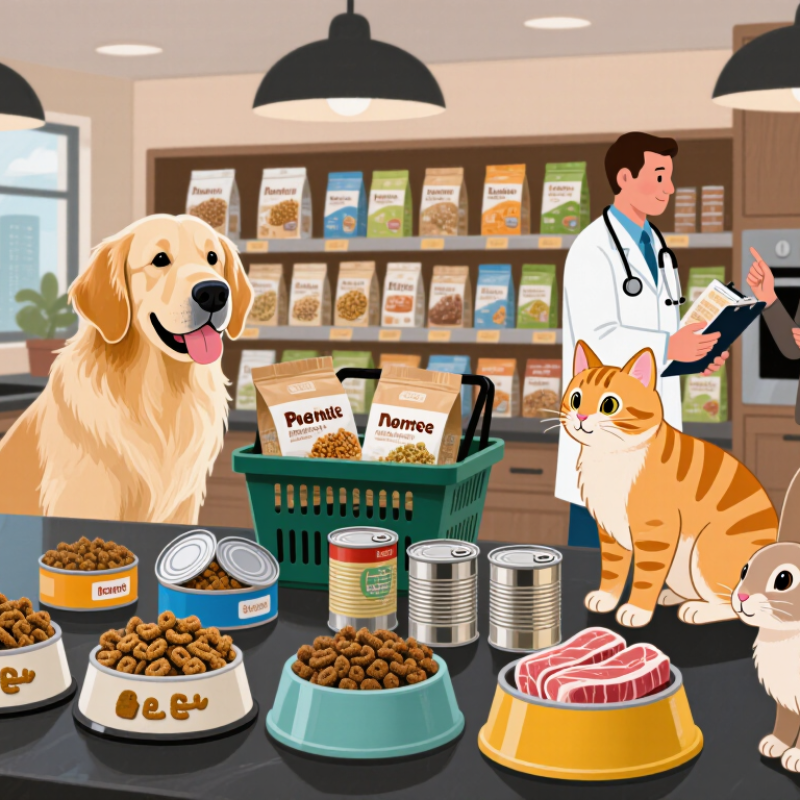
Commercial pet food meets a practical need: feeding pets consistently despite busy schedules. Pre-portioned kibble is easy to measure, while sealed wet food can simplify serving and storage. For commuters, predictable meals can make daily care less stressful. That matters. But convenience can become autopilot; portions still need to match a pet’s needs and activity.
Safety and quality depend on more than attractive packaging. Commercial products are made under controlled processes, and clear labels can help owners check ingredients, feeding guidance, and storage instructions. Look for intact packaging and a readable use-by date. A long ingredient list does not, by itself, prove better nutrition. Monitor your pet’s appetite, stool, coat, and energy after a food change. If something seems wrong, seek veterinary advice. Labels help, but they cannot predict how every individual animal will respond.
Tips: Measure portions with a clean cup, reseal dry food tightly, and keep it in a cool, dry place. Change foods gradually when possible. Small details count.
Retail and E-Commerce Expansion Across Global Markets
Pet food demand is becoming more visible as retail networks reach more households. In many cities, supermarkets offer wider shelves for dry food, wet food, treats, and feeding accessories. Convenience matters. Shoppers can compare package sizes, ingredients, and feeding directions in one visit. Neighborhood stores still play a role, especially where people buy smaller quantities or value advice from familiar sellers.
E-commerce adds another route to purchase. Online listings let owners reorder heavy bags without carrying them home, while delivery can help people with limited transport. Search filters, product photographs, and clear nutrition details may make comparisons easier. Subscription tools can prevent an empty food container, though they do not suit every household. Budgets change, pets have different needs, and fixed delivery schedules can become inconvenient.
Expansion looks different across markets. Where mobile payments and delivery networks are reliable, orders may arrive quickly; elsewhere, shipping fees and distance can limit choice. Retailers also need accurate local-language labels and dependable storage, particularly in hot climates. These details are less visible than a new app. They matter. Access is improving, but it remains uneven, and online availability does not always mean affordability or expert guidance.